The Borrowed Microphone: Why a Teenager's Guest Slot Can Outshine the Whole Set
Photo: Unknown authorUnknown author, Public domain, via Wikimedia Commons
A Chair With a Name On It
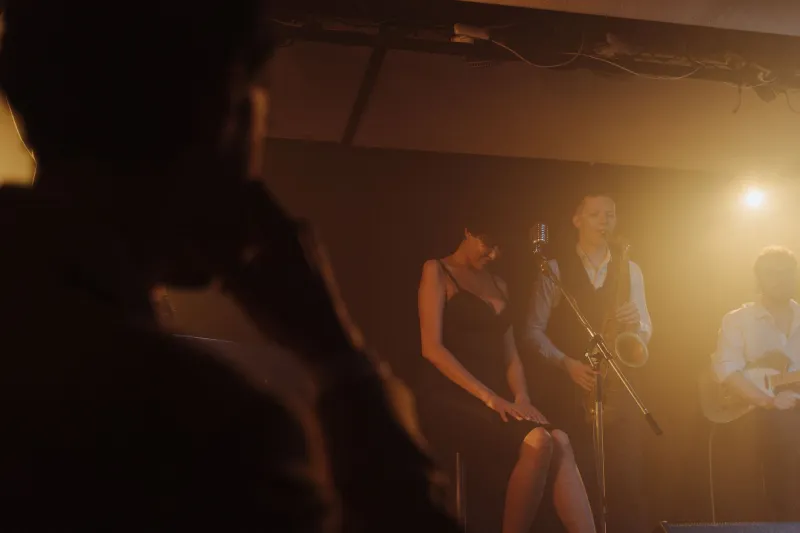
There is a moment, usually just before the second set, when a charity jazz night goes quiet in a different way. The host steps up, the house band adjusts a music stand, and a teenager walks in from the side of the room carrying a saxophone case or a folder of charts. The audience has been chatting over raffle tickets and warm white wine. Now they are watching a young player take the long route to the piano stool. It is a small tradition, but in 2026 it is one of the most quietly powerful things a charity jazz night can do.
The guest slot is not a talent contest and it is not a novelty. It is a deliberate handover of the stage, usually for one number and rarely for more than two. Organisers around the UK use it to connect the evening to the next generation of musicians, and to remind everyone in the room what the fundraising is actually for. In the world of Mitch Winehouse & Friends, where jazz heritage and music education sit close together, that borrowed microphone matters. It says the music is not a museum piece. It is a living thing, and somebody younger needs a go.
Why the Empty Chair Works
A charity night can easily become a tribute to the past. That is fine. Nostalgia sells tickets. But the guest slot changes the temperature. When a sixteen-year-old from a local youth jazz orchestra plays a chorus of a standard, the audience is not just applauding a child. They are seeing the point of the raffle, the bucket collection and the sponsored silence. The money is going somewhere visible.
That is why organisers tend to choose the sit-in player carefully. The best candidates are not always the most advanced. They are the ones who can hold a tempo, follow a cue and recover from a wrong turn without falling apart. A music teacher or youth jazz ensemble leader will usually know who is ready. Sometimes the recommendation comes through a local music hub, a Saturday morning jazz workshop or a Foundation-supported music education project. The question is simple: who would benefit from ten minutes with a professional rhythm section, and who can handle the room?
Picking the Tune, Not the Trophy
The repertoire should suit the player, not the optics. A young singer might do one chorus of a well-known standard in a comfortable key. A saxophonist might take the melody and a single improvised chorus on a blues. A drummer might sit in for a shuffle and learn more from four bars of eye contact than from a month of lessons. The musical director should send a chart and a reference recording at least a fortnight ahead, then allow a short afternoon rehearsal. Twenty minutes is often enough to sort out the count-in, the ending and the hand signal for the final bar.
It also helps to prepare the house band. Professional players are usually generous with young guests, but they need to know what is coming. Should the pianist lay out for the first chorus? Is the bass player expected to call the key? Does the drummer count it in, or does the guest? These small decisions stop a nervous moment becoming a shambles. A good rule for the guest is simple: play less than you think you should, listen more than you think you need to, and trust the bass player.
Safeguarding Is Part of the Arrangement
None of this works without proper care. A teenage guest at a licensed venue needs a parent or guardian to give written consent, and the organiser needs an emergency contact and a clear plan for the evening. A DBS-checked chaperone should be present, and the young player should never be left alone with an adult who has not been checked. The venue may have its own rules about under-eighteens, especially after a certain hour, and those rules should be agreed before the poster goes up.
Photography and filming need separate consent. The host should introduce the guest by first name, and only mention a school or youth group if the family has agreed. The teenager should know where the green room is, who to speak to if they feel unwell, and how they are getting home. A curfew is not a insult. It is respect. The same goes for sound levels, especially if the guest is a singer. Nobody wants a memorable debut followed by a ringing in the ears.
The Ten-Minute Checklist
The practical sequence is usually less glamorous than the applause. The guest arrives for soundcheck, meets the band, checks the key and the tempo, and walks the route from the side door to the stage. The host writes a short introduction. The band agrees who counts in. The guest decides whether to stand or sit, and where to put the music stand. There is a plan for the ending, even if the plan is simply that the drummer will catch the final crash.
Then the set resumes. The host says a name. The room applauds. The band starts. For a few minutes, the charity night becomes a lesson in courage, and the audience becomes a room full of witnesses. If the guest loses their place, the bass player walks them home. If they nail it, the room lifts. Either way, the bucket collection afterwards tends to be a little fuller. People give to a story they have just seen with their own eyes.
One Chorus, One Future
Mitch Winehouse has spent years speaking about music education and the importance of giving young people a route into the music that shaped Amy's life. The guest slot is that idea in miniature. It is not about producing a star overnight. It is about showing a teenager that there is a place for them in this music, and showing an audience that the next generation is already here, slightly nervous and ready to play.
So if you run a charity jazz night in 2026, think about the empty chair. Put a name on it. Make room for one tune. The speech from the stage will be forgotten by the time the raffle is drawn. The teenager's first chorus will not.