The Table by the Door: A Sensible Guide to Charity Jazz-Night Merch
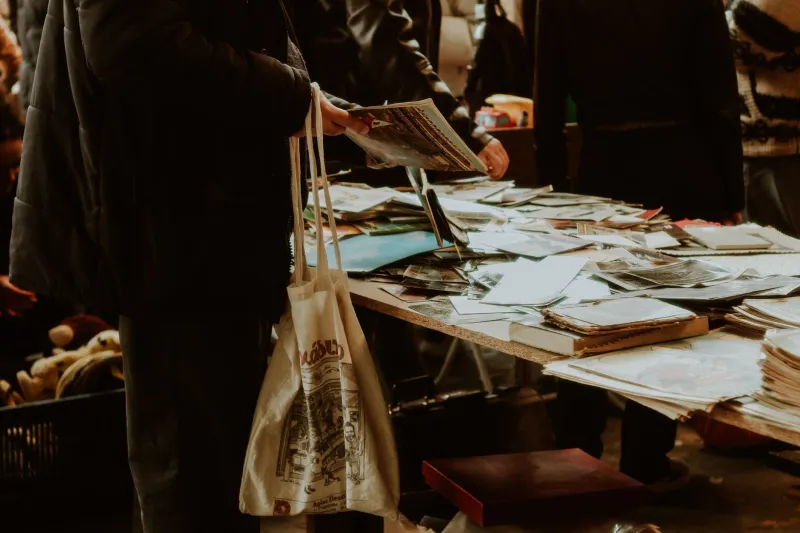
The table is usually the first thing you see and the last thing anyone plans. It sits just inside the door, next to the raffle tickets, a stack of programmes sliding gently sideways and a card reader that may or may not have signal. Somewhere behind it is a volunteer who has already been on their feet since four o'clock. And somewhere on it is the merchandise — the tote bags, the tea towels, the limited-run posters and the CD pile that has been travelling between charity jazz nights since roughly the last royal wedding.
It is easy to treat the merch table as an afterthought. But anyone who has spent a Saturday night in a church hall or a back room of a pub knows the truth: that table is the second stage. It is where the audience takes the evening home with them, where the cause becomes something you can hold, and where a good night quietly turns into next year's funding.
The Table Is a Second Stage
A jazz night raises money in three ways. The ticket, the raffle, and the table by the door. The first two are obvious. The third is where the storytelling happens, and it is where organisers most often either overreach or give up entirely.
The temptation, when you are passionate about a cause, is to print everything. Mugs, mouse mats, keyrings, coasters, lanyards, a commemorative spoon. The result is a table that looks like a car boot sale and a storage cupboard that smells faintly of cardboard for the next eleven months. The other temptation is to print nothing at all, because it feels like hassle, and then wonder why nobody knows what the night was actually for.
The sweet spot is smaller than most people think, and it starts with three questions. What will someone actually use? What tells the story of this cause? And what will still look good in a kitchen drawer in three years' time?
Start With Three Things That Always Sell
In our experience of charity jazz nights up and down the country, three items do the heavy lifting.
The first is the programme. Not a glossy brochure, not a twelve-page history of the charity, but a proper folded programme with the running order, a short note about the cause and the names of the musicians. Price it at two or three pounds, or include it in the ticket and sell spares. People keep programmes. They take them home and put them on the fridge. They are also the cheapest possible way to explain what the night is raising money for.
The second is the tote bag. A decent cotton tote with a simple design and the name of the cause will sell at eight to twelve pounds and will be seen in supermarkets for years. Avoid the thin, shiny bags that split at the handle. They are false economy and they end up in the bin before the audience has reached the car park.
The third is the limited-run poster. A short print run — fifty or a hundred, numbered if you are feeling fancy — gives the table a centrepiece and gives the audience something to buy that feels like a souvenir rather than a donation. Keep the design simple. A single image, the date, the venue, the cause. If you can get a local illustrator or a design student to do it for a credit and a ticket, even better.
What Sits, and Why It Sits
The CD pile is the classic offender. Somewhere in the history of charity jazz nights, a well-meaning musician donated two hundred copies of an album recorded in 2009, and they have been following the raffle table ever since. Unless the artist is playing that night and will sign them at the interval, a random CD is the hardest sell on the table. It is not personal. It is just that nobody under fifty owns a CD player, and nobody over fifty already has the album.
Other things that tend to sit: mugs with the wrong year printed on them, anything with a typo, commemorative pens, and anything that requires an explanation longer than one sentence. If you have to say 'it's a sort of wristband-slash-keyring', it is going to sit.
The rule of thumb is simple. If you would not buy it yourself for a fiver, do not expect a stranger to buy it for a tenner because the cause is good. Charity is generous, but it is not a licence to sell landfill.
Pricing Like a Human Being
Prices at a charity jazz night should feel like a nudge, not a negotiation. Round numbers, clearly labelled, with a small sign that explains where the money goes. Five pounds, eight pounds, twelve pounds. Not four ninety-nine, not fifteen with a card fee added on.
It also helps to have a free option. A bowl of badges, a stack of stickers, a simple flyer for the next event. People who cannot afford to buy anything should still be able to take something away and feel part of the evening. That is not a loss. That is the whole point.
And please, label the table clearly. A small card saying 'Every penny goes to music lessons for local kids' will outsell a beautiful poster with no explanation every time.
The Landfill Question
Nobody wants to raise money for a good cause by creating a problem somewhere else. Before you order anything, ask where it will end up. A tote bag that lasts five years is a good buy. A plastic poncho with the charity logo on it is not.
Good merch is useful, durable and honest. Bad merch is anything that exists only to have a logo on it. If in doubt, order less. Twenty well-chosen items on the table look far better than two hundred sad ones in a box under the stage.
The Story Card
One last thing, and it costs almost nothing. Put a small card on the table, A5 or thereabouts, that explains in plain English what the night is raising money for. Not a mission statement. Not a paragraph of funding jargon. A sentence and a number. 'Tonight is raising money for the Amy Winehouse Foundation, which helps young people facing addiction and supports music education in UK schools.' That is enough.
People buy from a table when they understand the story. They buy twice when they can see the story is true.
A Short Checklist for Saturday
Before the doors open, check the following. Is the table near the entrance but not blocking it? Is there a card reader and a cash tin with change? Are prices clearly marked? Is there a free bowl for people who cannot buy? Is there a story card explaining the cause? And is there a volunteer who is happy to be there, because a warm hello sells more tote bags than any poster ever will.
Get those right, and the table by the door stops being an afterthought. It becomes what it always should have been — a small, honest, useful part of a good night for a good cause.