Front of House, Heart of the Room: The Volunteer Crew Who Never Play a Note
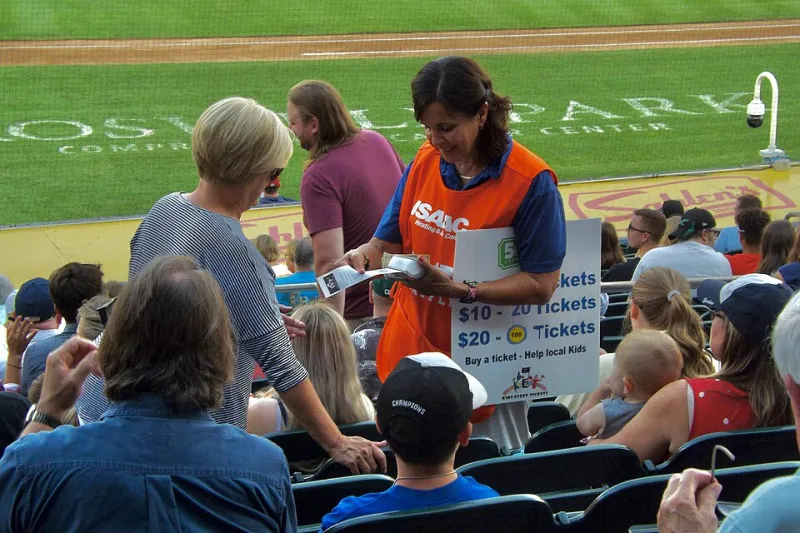
Photo: Andre Carrotflower, CC BY-SA 4.0, via Wikimedia Commons
At the end of a charity jazz night, the applause usually goes to the saxophonist. Quite right too. But the evening itself is often held together by someone you will never see on stage: the person who took your coat, checked your name off the list, sold you five raffle tickets and quietly moved a chair so an elderly couple could see the band.
At Mitch Winehouse & Friends events, that front-of-house crew is part of the furniture in the best possible way. They are the first hello and the last goodbye. They are also the reason a gig can feel like a community gathering rather than a transaction. This is a small tribute to them — and a practical look at how to find more of them.
The first face you meet
Think about the last jazz night you went to in a church hall or community centre. The music may have been superb, but your memory of the evening probably starts at the door. Was someone pleased to see you? Did they know where the loos were? Could they tell you whether the raffle was cash only?
That is the volunteer's hour. It is unglamorous, repetitive and absolutely central. A good door volunteer can spot a queue forming and open a second table. A good raffle seller can persuade a shy punter to part with a fiver without making them feel cornered. A good runner can get a message to the band that the second set needs to start ten minutes early because the hall has a hard curfew.
None of that appears on a poster. All of it decides whether the night runs smoothly.
Why they keep coming back
Ask regular volunteers why they do it and you rarely get a grand answer. It is usually a mix of small, honest reasons: they love the music, they want to support music education for young people, they have a spare evening, or they simply like being useful in a room full of people.
There is also the social side. For some, a charity jazz night is the most sociable few hours of their week. Volunteering gives them a role and a reason to talk to strangers. One regular door volunteer at a recent event described it as “the best night out where you are not really out” — you get the atmosphere, the music and the company, but you are also doing something that matters.
The charity angle is not incidental. The Amy Winehouse Foundation’s work in music education and young people’s wellbeing gives the evening a purpose beyond the bar take. Volunteers know that the raffle money is not just covering the hire of the hall. It is going somewhere useful.
The raffle table is a social engine
The raffle table is often treated as an afterthought. It should not be. It is where the evening slows down, where people chat, and where a lot of the money is raised. A well-run raffle is a small piece of theatre: the prizes on display, the ticket stubs, the announcements from the stage.
Good volunteers make it look easy. They know the rules, keep the cash tidy, and do not let the queue block the bar. They also know that a raffle is not a hard sell. A friendly “we’re doing the draw at half past, love” works better than a sales pitch. The best tables have a card reader for people who no longer carry cash, a clear list of prizes, and someone who is happy to explain where the proceeds go.
What good volunteer management looks like
Recruiting volunteers is one thing. Keeping them is another. The difference usually comes down to preparation.
A one-page brief is worth more than a long email. Tell people where to park, what time to arrive, what they will be doing, who their lead is and when they can take a break. Pair new volunteers with someone experienced. Give them a named person to ask if something goes wrong. Make sure they get a chance to hear some of the music — a volunteer who spends the whole night in a corridor will not come back.
Small practical things matter: a proper break, a hot drink, a safe place to leave a coat, and a clear cash-handling process. If the event uses raffle tickets, make sure volunteers know the licensing rules and what to do with the stubs. If there is a card reader, check the signal beforehand. If the hall has a tricky door, put someone on it who knows how it works.
And thank them properly. A shout-out from the stage is nice. A follow-up message the next day is better. A free ticket to the next event or a small box of chocolates is not bribery; it is manners.
Recruiting from the room
The best volunteers are often already in the audience. They just have not been asked. A short announcement at the interval — “if you fancy helping out at the next one, come and have a chat” — can bring forward two or three people who had no idea you needed them.
Look beyond the usual suspects. Local music students, university societies, U3A groups and workplace volunteering schemes are all good places to start. So are parents of young musicians, neighbours of the venue and people who have recently retired and want to be useful without committing to a full-time role.
Be honest about the ask. “Two hours, one night, we will show you the ropes” is easier to say yes to than an open-ended request. And make it easy to say no. Volunteers who feel pressured do not stay long.
Keeping the crew
The real test is the second event. A volunteer who had a good first night will come back if the rota is clear, the welcome is warm and the job is not a muddle. Send the rota early. Confirm by text. Let people swap shifts without drama. Ask what they would change. Then change one thing.
At Mitch Winehouse & Friends nights, the atmosphere depends on this quiet crew as much as the set list. They are the reason the door runs smoothly, the raffle gets sold and the band can concentrate on the music. The applause may go to the stage, but the heart of the room is often standing by the raffle table with a roll of tickets and a very good sense of humour.
If you have ever thought about helping out, consider this your invitation. There is always room for one more pair of hands.